AI helps write Easy Read
On November 19, 2026 Mencap and Google DeepMind launched a Gemini-powered Easy Read Co-Creator Tool so organisations can turn complex information into Easy Read text and images in minutes, with people with a learning disability still reviewing every page.

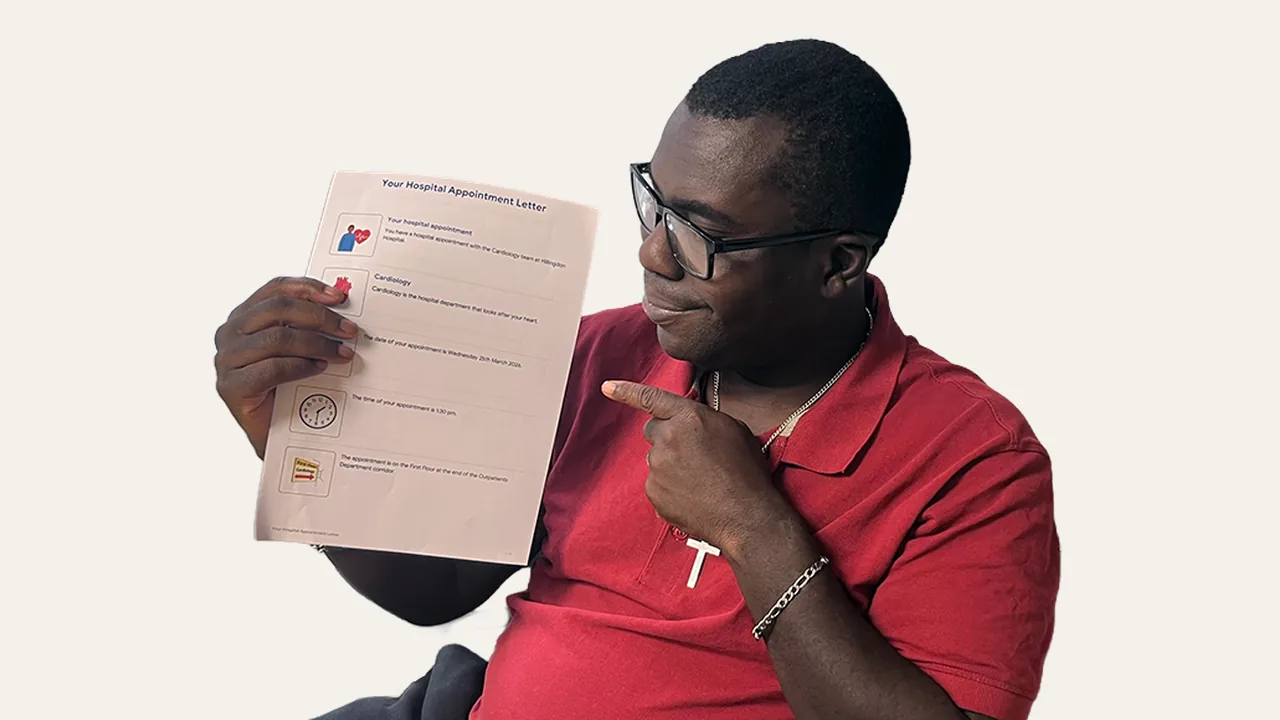
Official letters, clinic leaflets, and benefit forms are hard enough when the language is dense. For many people with a learning disability, that wall of text is the difference between handling something alone and needing someone else to decode it. On November 19, 2026, Mencap and Google DeepMind launched the Google DeepMind Easy Read Co-Creator Tool, a Gemini-powered helper that aims to make Easy Read versions far faster for the organisations that publish them.
This is good news for families, even though it is not a consumer app you download. The point is that more services may be able to offer Easy Read without waiting weeks or skipping it for cost reasons.
What Easy Read is
Mencap describes Easy Read as a way of making written information easier to understand, usually with pictures next to the writing. Learning Disability Today adds the practical markers most readers will recognize: short, simple sentences, clearer layouts, and relevant images.
That format is about independence, not “dumbing things down.” When an appointment letter, bill, or public-service leaflet arrives in Easy Read, someone can check the facts themselves instead of reading the same page four times or waiting for a relative to translate the jargon.
What Mencap and Google DeepMind launched
From Mencap’s tool page, Sarah Cowen-Rivers’ family story (19 November 2026), and Learning Disability Today’s report:
- The Google DeepMind Easy Read Co-Creator Tool was developed by Google DeepMind, shaped with Mencap, and designed alongside people with a learning disability.
- It is powered by Gemini and can turn complex information into simplified text with accompanying images in minutes rather than weeks.
- People remain central: Mencap is clear that people with a learning disability review, edit, and improve content, and that a person must check and approve what the tool produces.
- The tool is for organisations that publish information for the public (patients, residents, customers, service users, and similar audiences). Mencap’s FAQ says members of the public cannot use it personally right now.
- Google.org is providing $1 million so Mencap can train and support up to 50 organisations to use the tool between 2027 and 2030.
- Learning Disability Today reports that Central London Community Healthcare NHS Trust is testing it, and that more organisations are being invited into the funded training path.
- A Mencap survey cited in that coverage found 92% of Easy Read users said it was helpful, and 53% said not enough information is available in the format. Producing Easy Read can still cost about GBP 100 to 200 per page and take weeks, which is why many organisations struggle to keep up.
Mencap’s FAQ says the tool does not store uploaded content and the data is not used to train AI models, and that the tool is a co-production aid rather than a replacement for lived experience. Those claims come from Mencap’s own Q&A; treat them as the organisation’s stated design, and keep expecting human review on anything that affects health, money, or legal rights.
Why families should care
If you or someone you support has a learning disability, the win is not a new gadget on your phone. The win is a higher chance that clinics, councils, charities, and other services can produce Easy Read versions at a workable pace.
Mencap’s FAQ is blunt about the current audience: organisations first, because one organisation reaches many people, and the rollout is meant to include training and support. That matches the Google.org funding timeline for 2027 to 2030 rather than an overnight switch for every leaflet in the UK.
You can still act now. When a letter or webpage matters, ask the sender for an Easy Read version. Say who it is for, and point them to Mencap’s public pages on the Co-Creator Tool if they want the organisational path. Keep asking even when the answer is “not yet.” Demand is part of how formats become normal.
How to ask services for Easy Read
- Identify the document that is hard to use: appointment letter, clinic leaflet, benefits notice, school or council form, utility bill summary.
- Contact the organisation that issued it (patient advice line, accessibility team, customer service, or key worker) and ask for an Easy Read version.
- Be specific: which letter, which appointment date, and that the reader prefers short sentences with supporting images.
- If the service says Easy Read takes too long or costs too much, share Mencap’s public explainer of the Google DeepMind Easy Read Co-Creator Tool so they can register organisational interest themselves.
- Keep any accessible version you already use (trusted relative, advocate, or support worker) until the Easy Read copy arrives and you have checked it against the original facts.
Do this / don’t do that
Do
- Treat Easy Read as a right-to-understand tool for everyday decisions about health, money, and services.
- Ask organisations for Easy Read copies, and point them to Mencap when they want the Co-Creator programme details.
- Remember that people with a learning disability still review and approve the output. That human step is the feature, not a delay to skip.
Don’t
- Do not hunt for a public “Easy Read AI app” download. Mencap says the programme is for organisations, not individual households, for now.
- Do not assume every NHS trust or council already has the tool. Central London Community Healthcare NHS Trust is named as a tester; others are still in the interest and training pipeline.
- Do not trust an AI-only rewrite of a medical or benefits letter without a person checking it against the original. Mencap says that check is required.
Bottom line
On November 19, 2026, Mencap and Google DeepMind launched the Easy Read Co-Creator Tool, a Gemini-powered way for organisations to draft Easy Read text and images in minutes while people with a learning disability keep reviewing and approving the result. Google.org is funding Mencap to train and support up to 50 organisations from 2027 to 2030. For families: this is not an app to install, but it is a reason to keep asking your clinic, council, or support service for Easy Read versions of the letters that matter.
Image: Official photo from Mencap showing a man pointing to an Easy Read hospital appointment letter. Credit: Mencap.