Apple opens health AI study
On November 15, 2026 Apple launched the Apple Health AI Usage Study with OpenEvidence: a free U.S. research app for everyday health questions with clinical citations, optional HealthKit sharing, and clear medical disclaimers.

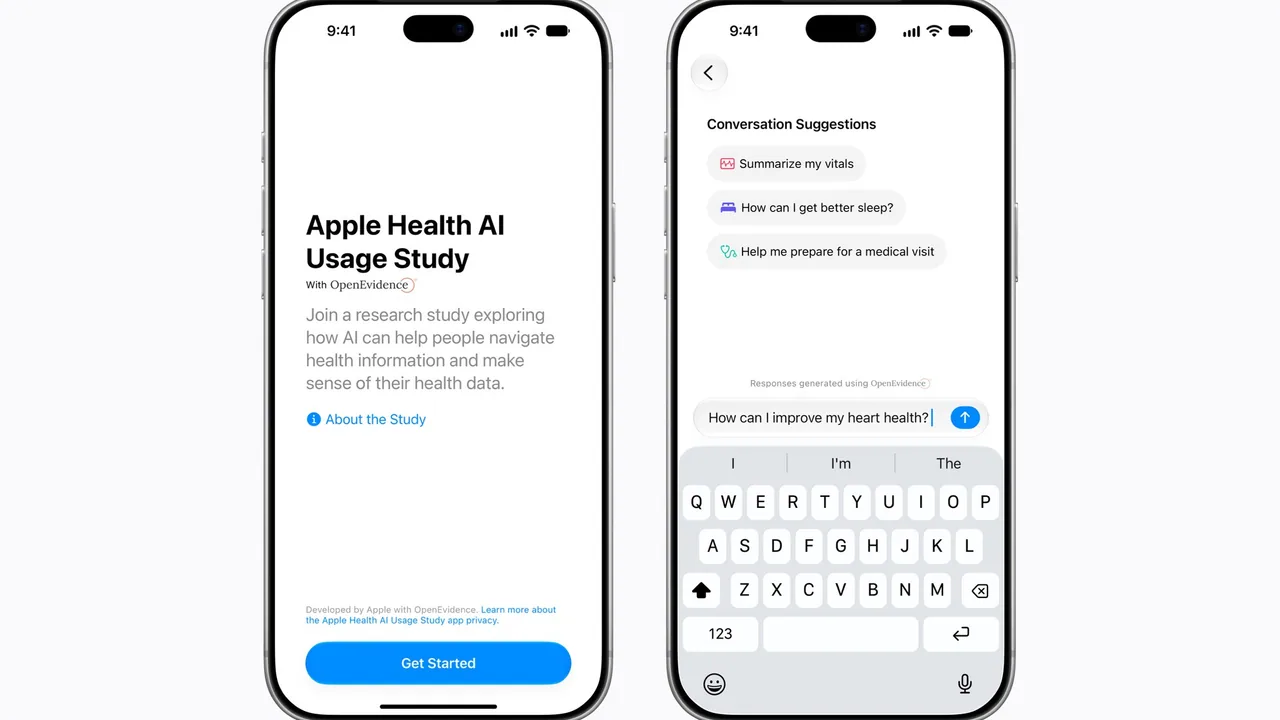
People already ask chatbots about symptoms, sleep, and lab results. On November 15, 2026, Apple announced the Apple Health AI Usage Study in the United States: a virtual research study plus a dedicated app that answers everyday health questions with clinically grounded language and linked peer-reviewed citations, in collaboration with OpenEvidence.
This is a research experience you can join on your own iPhone, not a product claim that Siri suddenly became your doctor.
What Apple launched
From Apple’s Newsroom post:
- The Apple Health AI Usage Study looks at trust, comprehension, response quality, and everyday health actions when people use conversational health AI.
- Answers come from OpenEvidence technology that draws on established sources such as The New England Journal of Medicine, the Journal of the American Medical Association, and Nature.
- You can ask everyday health questions, read approachable explanations, and see linked clinical citations behind each response.
- You may optionally share HealthKit types such as resting heart rate, activity, sleep, or lab results so the study can explore how personal context changes relevance.
- Apple says study data will not be used to train AI models, and participants keep control over HealthKit and survey sharing.
- Safety guardrails are meant to catch some concerning questions and point people toward a provider or other help.
- Enrollment is open to up to 200,000 eligible U.S. adults age 21 and older.
- Hardware floor: an Apple Intelligence-enabled iPhone (iPhone 15 Pro or later) on iOS 26 or later.
- Apple’s footnote is blunt: the app is not meant to diagnose or treat anything, or replace a clinician.
The free Apple Health AI Study App on the App Store matches that pitch: understand symptoms or conditions, put shared Health data in context, prepare for a medical visit, or build a personalized exercise or meal plan. Questions you ask also support the research. It is rated 18+, listed as free, and requires iOS 26.0 or later. The study itself is still limited to eligible adults age 21 and older in the United States, so the store rating is not the same as the enrollment floor.
Sumbul Desai, M.D., Apple’s vice president of Health and Fitness, framed the study as responsible innovation through scientific rigor. Robert M. Wachter, M.D., of UCSF, said patients and clinicians often use AI tools built in separate worlds, and studying what works when those worlds connect matters.
Why everyday iPhone owners should care
If you already paste health questions into a general chatbot, a study app that shows citations and keeps a medical disclaimer front and center is a calmer place to experiment. You are helping Apple and OpenEvidence learn how people understand AI health answers, while getting structured responses you can take to your own clinician.
Keep expectations honest. This is not a new Health app feature shipping to every iPhone overnight. It is a U.S. research enrollment with a hard device floor (15 Pro-class Apple Intelligence phones on iOS 26+). Prefer Apple’s Newsroom wording if a recap conflicts with the official eligibility rules.
How to join on your own iPhone
- Confirm your phone is an iPhone 15 Pro or later with Apple Intelligence available, and that iOS 26 or later is installed (Settings → General → Software Update, then Settings → General → About).
- Open the Apple Health AI Study App listing in the App Store and install it from Apple.
- Read the enrollment screens carefully. Decide whether to share any HealthKit metrics. Skip sharing if you only want to test question and answer flow.
- Ask a low-stakes everyday question first, then check that the response includes citations you can open.
- Treat concerning answers the way Apple’s disclaimer says: talk to a doctor or clinician. Do not change medications or ignore urgent symptoms based on the app alone.
If the App Store page says you are ineligible, do not sideload anything. The study is geographic and hardware gated on purpose.
Do this / don’t do that
Do
- Read Apple’s study announcement before you enroll.
- Keep a written list of questions for your next clinic visit if the app helps you prepare.
- Turn off HealthKit sharing later if you change your mind about personal data in the study.
Don’t
- Do not treat the study app as a diagnosis or emergency service.
- Do not invent country availability outside the United States Apple named.
- Do not paste other people’s medical details into the app without their consent.
Bottom line
On November 15, 2026, Apple opened a U.S. Health AI usage study with OpenEvidence: a research app for everyday questions with clinical citations, optional HealthKit context, privacy limits, and a clear “not medical advice” line. On your own phone: confirm a 15 Pro-class device on iOS 26+, install the official study app, enroll only if the terms fit, and still verify anything important with a clinician.
Image: Official Apple Newsroom art for the Apple Health AI Usage Study app.